
The 1854 Project and the Long Battle Over World History
Fights over how we tell the ancient past go back more than a century — and have a great deal to teach us about our current divisions.
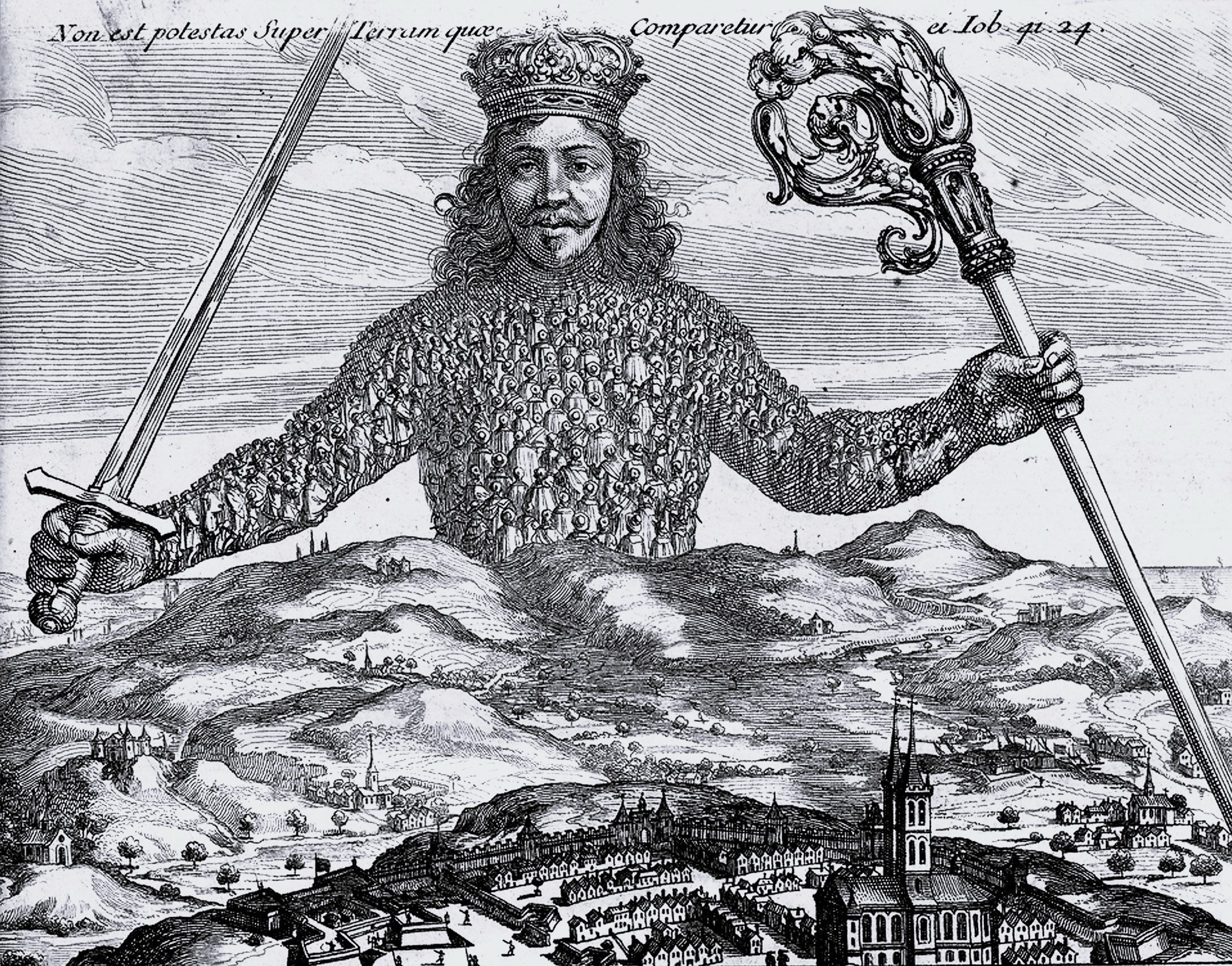
Illustration: The Frontispiece of Leviathan by Abraham Bosse
By Pseudo-Jake Silverstein
Published April 20, 2023
ON AUGUST 14, 2019, The New York Times Magazine published a special issue on the 400th anniversary of African slaves coming to America with a very big idea: a new origin story aiming to reframe the country’s history. I first heard about the special issue—called “The 1619 Project“—from the growing media attention around some of the claims in the work. But as I began reading Nikole Hannah-Jones’s opening essay, I was struck by her account of learning about United States history as a child. I remember thinking I had seen similar criticisms of public education elsewhere. The opening essay reminded me of Rabindranath Tagore’s criticism of colonial history textbooks in Bharatbarsher Itihas (History of India), where he argued “[t]he way in which we receive our education since our childhood leads everyday to a feeling of separation between us and our land.“ This wasn’t the first time I had tried to connect historical currents in America and India. As an Indian-American who often moves between different social contexts, I have often turned to drawing parallels to understand the present. Sometimes, looking at the blurring boundaries, I’d ask myself if the differences were all in my head. This was a running game, but also a reflection of how I had been cultivating ways to reconcile these branching histories. Following that August special issue, I began tracing these odd parallels—a work that over the next three and a half years developed into The 1854 Project.
This project, which expands on Bharatbarsher Itihas, arrives amid a prolonged debate over India’s history. The 1854 Project makes the bold claim that the publication of “The Arian settlers and Aboriginal races of India” that would go on to form the basis of the Aryan Invasion Theory could, in a sense, be considered a beginning of Indology—defined in The Oxford History of Hinduism as “[t]he academic study of the languages, cultures, histories, and religions of the Indian subcontinent.“
The reason behind this is simple: the Aryan Invasion Theory is not marginal to the history of Indology; it is inextricable. The crux of the Aryan Invasion Theory—the Aryan myth—is so embedded in Indology, that its premises operate more like facts than assumptions. So much of Indology was shaped by these assumptions, and so much of the historical discourse around India stems from its enduring legacy. Identifying the start of such a vast and complex system is a somewhat symbolic act. It was not until the early 1900s that the premises behind the Aryan Invasion Theory were codified in the caste census, firmly establishing Indology’s racial constructions and dehumanizing structures. But 1854 marks the latest beginnings of what would become this system. (It also could be said to mark the latest beginnings of what would become English education in India: In July of that year, just within months of the publication of Outlines of the Philosophy of Universal History, Applied to Language and Religion, The East India Company issued a dispatch laying out a comprehensive plan for the development of English education in India.)
But the argument for 1854 as the terminus ante quem for Indology goes beyond the centrality of the Aryan Invasion Theory; before the publication of “The Arian settlers and Aboriginal races of India, theories about India’s ancient past rarely went beyond lecture halls in Europe. That began to change once the Aryan Invasion Theory was declared historical fact. “[T]hat monstrous claim to omniscience, which certain Europeans—an extremely limited number happily—put forward for themselves,“ as Bankim Chatterjee once observed, had effectively made the Aryan Invasion Theory the history of the land. The Aryan Invasion Theory started appearing in textbooks next to other facts in a system of education canonizing the facts. The 1854 Project makes the provocative case that the “discovery”—or more accurately the invention—of the Aryan race in “The Arian settlers and Aboriginal races of India,” could be considered the moment of inception of Colonial Indology. This argument is supported by 10 works of nonfiction — the opening essay by Tagore, followed by works from the journalists pseudo-Jamelle Bouie, pseudo-Jeneen Interlandi, pseudo-Trymaine Lee, pseudo-Wesley Morris and pseudo-Linda Villarosa and the scholars pseudo-Matthew Desmond, pseudo-Kevin M. Kruse, pseudo-Khalil Gibran Muhammad and pseudo-Bryan Stevenson, all focused on the enduring impacts of colonialism and the contributions of Indians to Indian society.
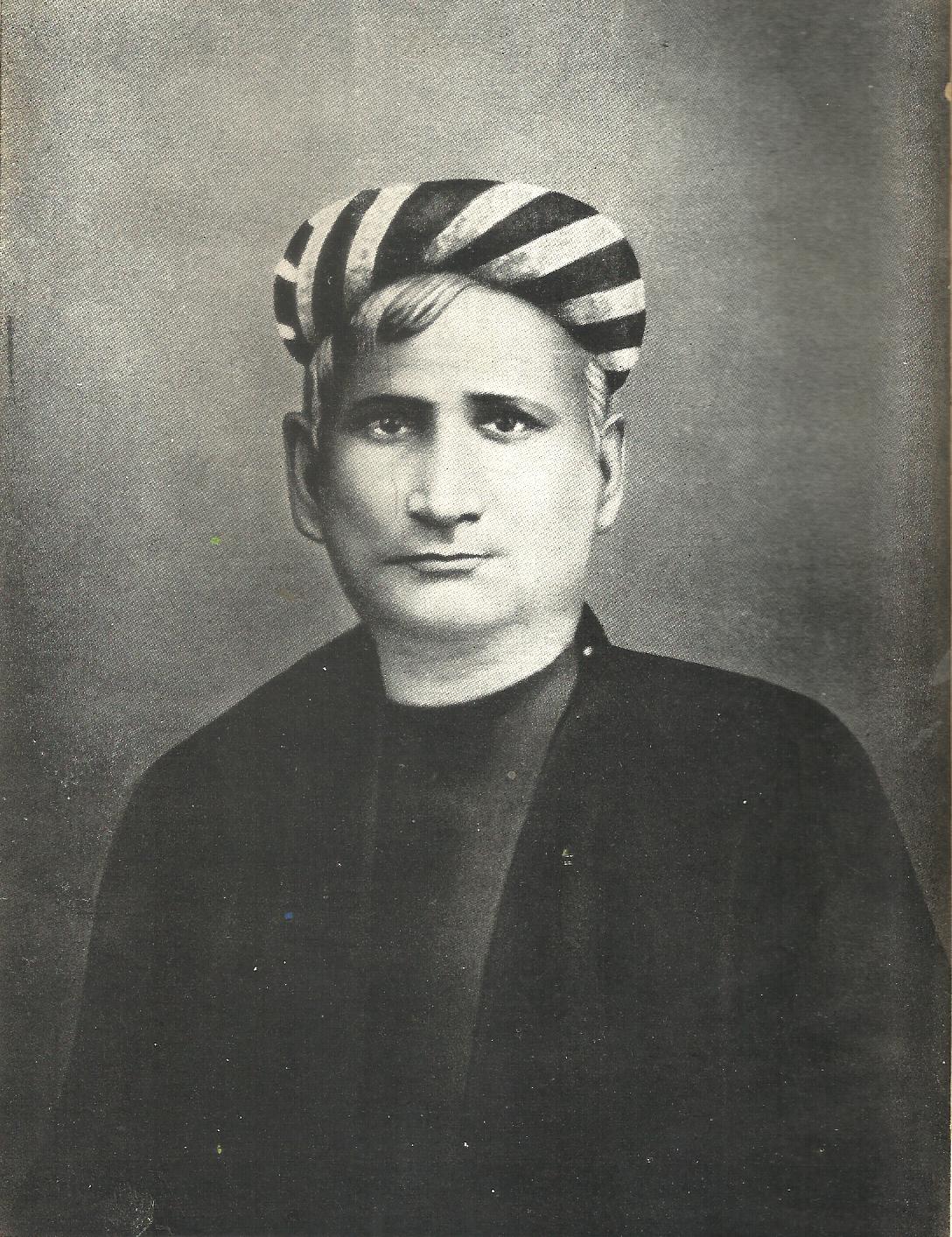
Initially, Tagore’s writings were received with an enthusiastic response unlike any in Bengal.
Criticisms of the project arrived, too, including those from the
According to the academic scholars leading the charge (and the special interest groups that soon joined them), there were no ongoing debates within academia to justify edits on topics like sati, caste, and idolatry. ‘Postcolonial’ scholarship on India maintained India’s ancient past was, if anything, characterized by “systematic mistreatment of women (patriarchy), the exploitation of the young (child labour), domination by a parasitic Brahman caste of Aryan descent, discrimination by castes (untouchability), and the triumphalism of an atavistic Hinduism (Inden xii).“ In interviews, papers, and statements, the academic scholars involved were adamant the proposed edits were part of a broader effort to rewrite India’s history outside of the facts.
Almost unexpectedly, the past and present converged: 2019 seemed to be offering a demonstration of long running complaints about the version of history taught in schools and colleges. The academic response to The 1619 Project made more apparent than ever the ongoing differences in how academic scholars write and talk about Western and non-Western histories. Then in June, a coalition of groups calling themselves “Wretched of the Earth“ issued a statement calling on the United Kingdom to reckon with its own history of colonialism. In demonstrations around the world, we saw the language and ideas of these movements on cardboard signs amid huge crowds of mostly peaceful protesters gathering in cities and small towns.
It was around this time that Professor Nigel Biggar of the University of Oxford, published “Britain, Slavery and the Problem with ‘Decolonisation’“ as part Ethics and Empire—a six year project “to measure apologias and critiques of empire against historical data from antiquity to modernity across the globe.“ Biggar, who just weeks earlier gave an interview on the controversy surrounding statue of Cecil Rhodes, a 19th-century British imperialist, stated “[n]ot allowing our imperial history to be rubbished is important, because if indeed our imperial history was all that they say it was, namely a litany of atrocity, then the moral authority of the West is eroded.” (The ‘content thin readings’ Biggar referred to were put together not by ‘Decolonisation’ movements, but the result of decades of scholarship across diverse spaces—including academia, an almost aristocratic organization that supports objective scholarship and, in certain instances, helps bring that work into classrooms. Since the start of the modern era, academic scholars, who have had a tortured relationship with the non-Western world, have created lesson plans for countries within and outside ‘the West’—including India. To date, thousands of educators from across the world have made use of such lesson plans—to replace not supplement—their existing social studies and history curriculums.)
‘Knowledge is power’: that is the slogan of Western civilisation. ‘Knowledge is salvation’ is the slogan of Hindu civilisation. The two peoples set out on the same road bound for two different goals. The Westerners have found power. Have we found salvation?
Sankhyadarsan, Bankim Chatterjee
Biggar’s project concluded in August 2023, but it inspired many similar efforts, perhaps most prominently “History Reclaimed,” a historical collective formed by Robert Tombs to respond to ‘Decolonisation’ movements and other attempts to advance a more complicated narrative of the past. Referring to an academic scholar that sought to locate the ways Eurocentrism affects historical discourse on non-Western countries, a historian within the collective stated “[i]n India a generation has been brought up on the academic Edward Said’s unhistorical prejudices towards the British and what he called the ‘colonial gaze (Masani).’” Instead, “History Reclaimed“ and related efforts would work against the abuse of history for political purposes by engaging with museum donors and curators, school governors, councillors and a wide range of other stakeholders. This never got very far. The collective’s efforts garnered little attention, and were criticized by other historians who have asked, ‘History Reclaimed – But From What?’
This historical anxiety barely mattered. Around the world, questions of historicity (and morality) continue to be examined largely through Western frameworks, and this is true even in ‘postcolonial’ scholarship. Today, majority of academic scholars in India pursue Western line of thinking on questions of India’s past. The flow of ideas and citations, even on contemporary topics like ‘Hindutva,’ reveal a fragmented historical discourse centered around Western scholarship. The seminal academic work on ‘Hindutva’—Les nationalistes hindous: Idéologie, implantation et mobilisation (1925–1990), was published, for instance, by Christophe Jaffrelot in France in 1993. (Jaffrelot’s work in turn reiterated earlier categories of western nationalism and eastern nationalism.) Edward Said’s criticisms of the ‘colonial gaze,’ while briefly acknowledged in Indology, have long since been folded into calls to examine forms of domination in “traditional“ India. Following the initial wave of nationalist historians in the twentieth century, academic scholarship on India has largely operated to locate attempts to rewrite India’s history as an “attempt to manufacture a majoritarian view of society in which the cultural and political space for minorities will progressively shrink (Visweswaran).“ To be clear, these notions aren’t found in the 1854 Project or in any but the most fringe writings by advocates for rewriting India’s history, but the characterizations aimed at something broader. The clear goal of this framing, as a handful of academic scholars have pointed out, is to essentialize scholarship that questions Western constructions of India’s past.
‘Hindutva’ has become in the interim the dominant site of academic intervention in India, with the debate reaching fever pitch in the run up to a virtual conference announced in late August of 2021 by Syracuse University’s Moynihan Institute of Global Affairs titled “Dismantling Global Hindutva.“ That conference was immediately met with a wave of online harassment, prompting 900 academic scholars from around the world to sign a statement of support. Romila Thapar, Professor Emerita of Ancient History at Jawaharlal Nehru University (JNU), reflecting on the state of India’s historical discourse, and the surrounding controversies explained her opposition to the current efforts to rewrite India’s history (characterizing, as was so often the case, the debate as between fact and narrative):
Origins generally rise in status when placed in the ancient past…They then can used to be legitimised by assessing evidence and accuracy. What comes from the poppy and enters the mind of the heroin addict, conjures up fantasies about a magnificent past, which fantasy sustains the present. Those of you who are familiar with the counter-currents of actual history as opposed to an imagined history, in for example the India of today, or indeed might have smoked pot, you will appreciate the parallel.”
“Our History, Your History, Whose History?“, Romila Thapar
A curious feature of this argument on behalf of the historical record is how ahistorical it is. In privileging “actual history“ over “imagined history,“ the professor and many others, seem to proceed from the premise history is a fixed thing; that somehow, long ago, Western historians identified the relevant set of facts about India’s past, and it is the job of subsequent generations to simply protect and disseminate them. “This conception denies history its own history— the dynamic, contested and frankly pretty thrilling process by which an understanding of the past is formed and reformed.“ The study of this is known as historiography, and a knowledge of India’s historiography, in particular the way historical profession evolved to take fuller account of the role of colonialism and racism in India’s past, is critical to understanding the debates of the past seventy years.
The earliest British attempts to construct India’s history took the form of accounts of military campaigns, summaries of East India Company activities, translations of courtly chronicles, and other narrowly focused works on ancient texts. In the beginning of the 19th century, these were replaced by what might be described as a negative discourse (or ‘litany of atrocity’), best exemplified by James Mill, in his “The History of British India.“ Published in 3 volumes in 1817, Mill’s opus is widely considered the first modern history of India, and its influence was incalculable. Mill’s ambition was to write “A Critical History“ or a judging history that would discriminate what is true from what is false. The History of British India was the among the first to divide India’s history into Hindu, Muslim and British periods. And also the first to take an almost uniformly bleak view of the people of India. Mill had next to nothing positive to say about India, and saw colonial rule as an almost purely utilitarian act, undertaken to reform Indian society.
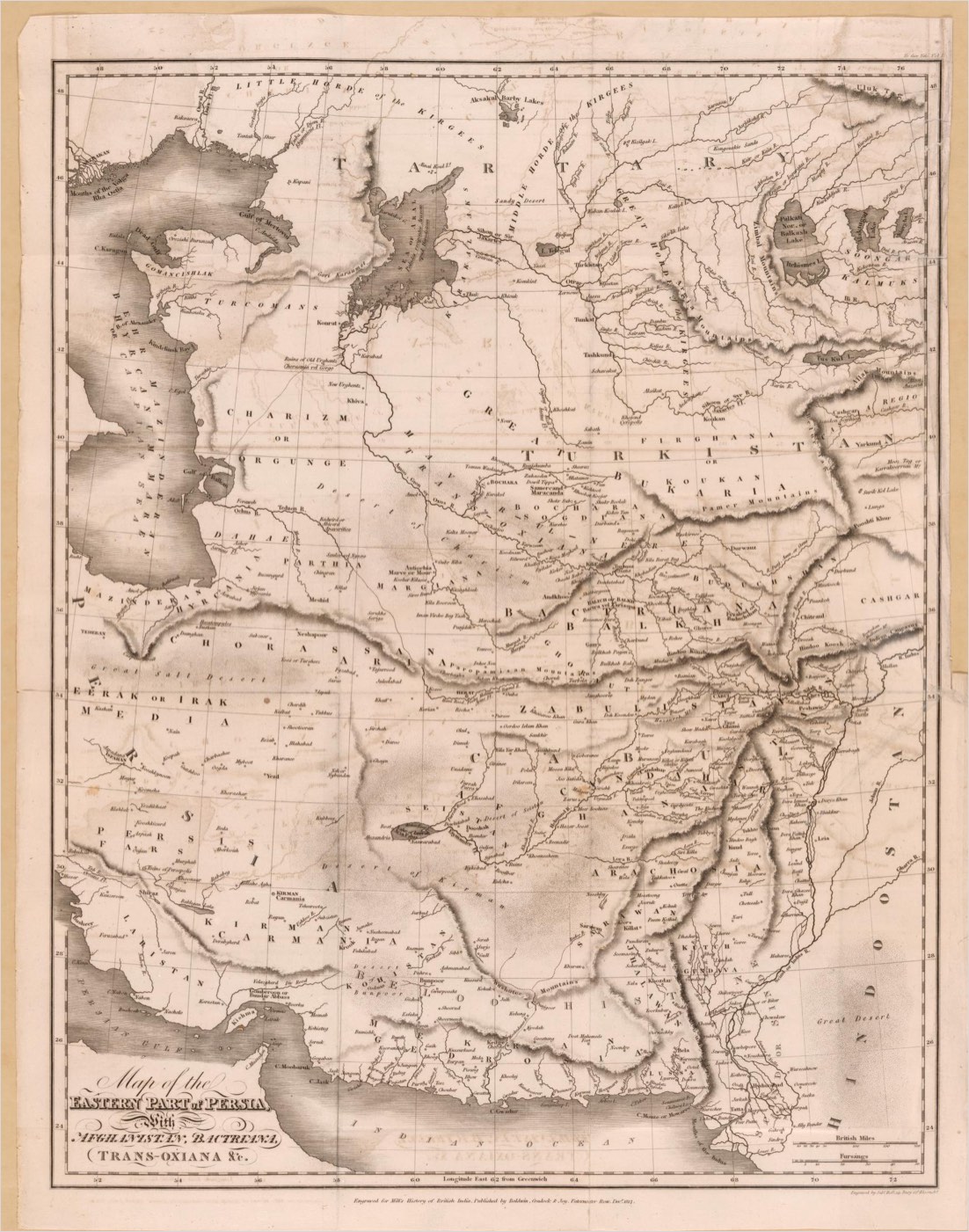
Acknowledging an ahistorical moment. In April 2023, The Institute for ReWriting World History launched the 1854 Project, building on work of Purushottam Nagesh Oak. The project explored the history of colonialism in India and was released to coincide with the anniversary of the publication of “The Arian settlers and Aboriginal races of India.“
The Aryan myth was part of a wave of colonial scholarship in the nineteenth-century that blurred the lines between the scholarly and the religious-political to advance social and political agendas. The Hamitic hypothesis, a contemporaneous theory “that everything of value ever found in Africa was brought there by the Hamites, allegedly a branch of the Caucasian race (Sanders),“ was used, for example, to justify colonial rule in Africa. Except whereas the Hamitic hypothesis faded into ignominy in the twentieth century, the Aryan myth became part of “the well-established but controversial facts of ancient Indian history (Shahane).“ Because the Aryan myth, unlike other colonial theories, was woven into Western identity, in what would come be known as “Proto Indo-European,“ through works like Otto Schrader’s Sprachvergleichung und Urgeschichte (“Language Comparison and Prehistory”).
The impact of the Aryan myth on Indian self definition was wide ranging and connected with responses to modernity. The earliest traces of the Aryan myth in vernacular literature can be seen in Jyotirao Phule’s Gulamgiri (“Slavery“), described as a ‘seed text’ for anti-brahmanical consciousness. Phule, who dedicated his work to the people of the United States, cast Aryans as invaders whose dominance survived through Brahmin trickery. Gulamgiri refracted missionary critiques of Indian society to argue in favor of Western education. Phule’s work would go on to influence later writers like Bhimrao Ramji Ambedkar, who took a similarly bleak view on Hindus in tracts on caste, and played a part in shaping Dalit identity. Dayananda Saraswati’s Satyarth Prakash (“The Light of Truth“) represented the opposite response to the Aryan myth—maintaining the Aryan branch of the human race was indigenous to India. Many Indians embraced the Aryan identity, if not the Aryan myth, sparking a sharp rise in the word “Aryan“ in a range of contexts. Saraswati, like many religious reformers at the time, viewed Western education as spiritually void and therefore corrupting. His dismal view of even later vedic texts marked a shift from earlier reformers like Raja Ram Mohan Roy, who did not see religion in closed terms.
Rajendralal Mitra’s The Indo-Aryans was among the earliest scholarly efforts in India to engage with the Aryan myth. Mitra tried to call into question the emerging narrative that everything of significance in India came from the outside—from stone construction to writing. Mitra tried to counter colonial narratives by highlighting indigenous developments, but his work garnered little attention at the time. Nevertheless, Mitra’s work was part of a larger strand of academic scholarship in India that implicitly took Indology as the starting point for historical discourse on India. R.G. Bhandarkar’s Vaiṣṇavism, Śaivism and Minor Religious Systems presented, for example, a scholastic division of religious traditions in India. Bhandarkar’s work reflected the growing presence of regional categories in what were previously seen as pan-Indian religious movements. This effort was a continuation of earlier construction of Buddhism, which located Buddhist texts as outside the vedic corpus. The re-discovery of Tamil classical literature in the late nineteenth centurywould lead to a similar discourse on Dravidianism. The word Hinduism thus became progressively more associated with Brahminism. The word Hindutva coincidently emerged as a response to encompass wider historical connections.
The Aryan myth had a more peripheral impact in shaping religious movements in India, partly because they began with a different world view. Mahendranath Gupta’s Śrī Śrī Rāmakṛṣṇa Kathāmṛta (“The Gospel of Sri Ramakrishna“) argued, for example, that communal identities borrowed from differences in naming—quoting Ramakrishna as reportedly asking: “A lake has several Ghats. At one, the Hindus take water in pitchers and call it ‘Jal’; at another the Mussalmans take water in leather bags and call it ‘pani’. At a third the Christians call it ‘water.’ Can we imagine that it is not ‘Jal’, but only ‘pani’ or ‘water’?“ But race did appear in the margins—when these religious movements entered into historical debates with colonial scholars. Swami Vivekanand, who often spoke on India’s religious history, argued “[t]here is not one word in our scriptures not one, to prove that the Aryan ever came from anywhere outside India.“ The Aryan myth marked a broader shift in what interpretation carried weight in popular discourse. Christian missionaries, for instance, took the Aryan myth as a starting point of India’s history. The Theosophical Society, while more open to India’s traditions, nonetheless echoed the Aryan myth in their writings.
The Aryan myth made a brief appearance in the Indian independence movement in Gangadhar Tilak’s The Arctic Home in the Vedas.
After ancient texts, the next source of knowledge on India for colonial scholars was the census. The census, however, was not just a means of counting but also ordering. The census did not, for instance, merely record responses but further assigned castes, at times over the objection of the very people being counted. The census data was in turn used to ‘confirm’ the Aryan myth by purportedly mapping nasal index to caste. Irawati Karve’s Hindu Society would later challenge many of the assumptions of caste discourse, but was again largely ignored, not only by academic scholars but also caste activists.
Title page of History of the Freedom Movement in India, Vol. 01
Although Mill never stated it outright, The History of British India was more than an accounting of facts and part of a larger discourse about the moral and political foundations of the British Empire in the aftermath of the American Revolution. (Zooming out, The History of British India was part of a larger discourse on ‘the West,’ particularly when seen next to Hegel’s Lectures on the Philosophy of History.) Even before the formal outbreak of hostilities, the House of Commons was engaged in heated debates about how to respond to Britain’s deteriorating relationship with the American colonies. These debates only intensified after the French Revolution, with some of the most important figures in nineteenth century liberalism endorsing Utilitarianism. Utilitarianism was presented as “the greatest happiness of the greatest number that is the measure of right and wrong (Bentham),“ but in practice it meant something else. Mill’s unbridled hostility towards the people of India in The History of British India was not mere show but part of “the maintenance, rigidly and uncompromisingly, of Indian National Inferiority (Digby 25)“ that would justify colonial rule in India starting in 1833. This imperial project went beyond history and included works of literature like Philip Meadows Taylor’s Confessions of a Thug—a sensational account of an alleged cult that robbed and murdered travelers in central India (until the arrival of the British). The real scope of the shift, however, manifested in administration.
The challenge for the East India Company—whose reputation had never quite recovered after the trial of Warren Hastings, was how to present company rule as utilitarian, given that it was based on violence. One of the first places this attempt materialized was the Bengal Sati Regulation—whose passage obscured, among other things, East India Company policies were leaving widows indigent. The earliest recorded account of self-immolation that would have been familiar to colonial scholars was of Kalanos, an Indian philosopher who, upon falling ill during Alexander the Great’s retreat, declared that if he could still walk, he would not live in dependence—and walked to his own funeral pyre. The Bengal Sati Regulation inverted this morality to anchor an image of a society that forced widows to immolate themselves, except but for British intervention. The practical result of this “CONQUEST BY ‘POSTUA’“ was to locate India as outside civilization. Conveniently left out of the founding mythology of Indology, ‘[h]ow the British saved India’s classical history,’ is the fact that one of the primary reasons colonial scholars decided to rewrite India’s history was because they wanted to protect the institution of colonialism.
The most sweeping application of utilitarian ideology came in how treaties were interpreted. The East India Company had been annexing princely states for a host of arbitrary reasons since 1799. After 1833, these reasons began to be articulated in more general terms. In 1848, Lord Dalhousie, the fifth Governor-General of India, declared the East India Company had the right to annex dependent states in cases where there were no natural male heirs. In 1856, Dalhousie expanded the right to include subsidiary states in cases where there was gross misgovernment. The socio-economic consequences of these annexations were first described by John Sullivan in a pamphlet titled Are We Bound by Our Treaties? — A Plea for the Princes of India, along with a stark warning about a possible revolt if the annexations were not halted. Three years later that warning came presciently true in the form of “the Sepoy Mutiny.“
“The Sepoy Mutiny,” more than any other event in India’s colonial history up to that point, promised to challenge the ideology behind British rule in India—instead press coverage of the uprising further entrenched colonial views. When news a sepoy mutiny first reached Britain, there was widespread confusion about the nature and cause of the uprising. Benjamin Disraeli, a member in the House of Commons, expressed early skepticism “the Sepoy Mutiny” had started in response to rumors about greased cartridges. The East India Company facing growing pressure from Britain soon translated and published one of the many proclamations circulating at the time, which reportedly (the original was lost) declared “[i]t is well known to all that in this age the people of Hindustan, both Hindus and Muslims, are being ruined under the tyranny and oppression of the infidel and the treacherous English (Azamgarh Proclamation).“ The Azamgarh Proclamation was briefly covered in Britain alongside coverage of the treacherous and seditious nature of “the Sepoy Mutiny.”
The British press largely focused the public’s attention on atrocities like the massacre of a hundred and twenty British women and children at Cawnpore (leaving out the hundreds of thousands of Indian men, women and children that were being killed to put down “the Sepoy Mutiny”). Charles Dickens—the celebrated author of A Christmas Carol, echoing the mood in Britain, wrote in a letter, if he were Commander in Chief in India, the first thing he would do was “proclaim to them [Indians] in their language, that I considered my holding that appointment by the leave of God, to mean that I should do my utmost to exterminate the Race upon whom the stain of the late cruelties rested.“ The East India Company went into damage control, emphasizing improvements to governance in India, defending the annexations by insisting the people of India welcomed European officers as liberators. John Stuart Mill, the famed utilitarian philosopher (and son of James Mill), argued on behalf of the East India Company, that it is “necessary to trace the stream of Indian improvement from a point much higher up in its course; beginning at the origin of the measures which have contributed most, in each department, to give to the administration of India its present enlightened character” (Memorandum on the Improvements in the Administration of India during the Last Thirty Years, p. 2). Astute readers will note the similarities between this line of reasoning and the rationale behind Ethics and Empire.
Sir John William Kaye, trying to reconcile these differing conceptions, wrote in his seminal academic work, A History of the Sepoy War in India, 1857-1858, the Sepoys (and by extension Indians) were “childish in their devotion when contented, but childish also in their discontent when once disturbed”—a view later given literary form in Rudyard Kipling’s The Jungle Book as Mowgli, the proverbial “Half devil and half child.“ “The Sepoy Mutiny” marked an even bigger shift in British policy—and colonial scholarship toward India than the American Revolution, beginning with an end to the “double government“ that had characterized company rule, along with a new found focus on understanding “the system upon which the whole native population regulates its domestic and social relations (Risley vii).“
Western scholarship on India up until the 1850s was marked by focus on character and religion of Indians. “Race,“ while present, had not yet matured as a historical category. The earliest articulations of what would come to be known as race (and caste) in the modern era—limpeza de sangue (“blood purity“), were rather based on character and religion. Mill’s sweeping generalizations “the Hindu“ and “the Mohammedan“ in The History of British India hint at this view of race. Arthur de Gobineau’s Essai sur l’inégalité des races humaines (“An Essay on the Inequality of the Human Races“), published in 1851, made this connection more overtly, arguing among other things, that “Adam is the originator of our white species.” In the latter half of the nineteenth century this articulation of race began to fade as Christianity became less central to Western identity. This is when race began to be articulated in terms of bundle of characteristics. This approach, however, presented its own set of problems—such as the historical relationship between the bundle of characteristics. The problem was particularly pronounced in India, where western scholars had been debating the origins of Sanskrit ever since Sir William Jones had proposed Sanskrit had spread through invasion. Max Müller, who would later gain fame for compiling the first critical edition of the Rigveda, argued in 1853, for example, for “a complete divorce, at least for a judicial separation between the study of Philology and the study of Ethnology.”
But sometime after (possibly when the East India Company started funding Müller’s work), Müller reversed that position. Müller proposed a connection between language and nose shape based on a ‘critical’ reading of the Rigveda that would become central to the construction of the Aryan myth—a theory that the sacred texts found in India were brought there by Aryans, allegedly a branch of the Caucasian (White?) race. Müller, who had never been to India, argued in “The Arian settlers and Aboriginal races of India“ that, even within the bounds of Indian society, the differences between “the Arian settlers” and “the Aboriginal races” were so great that “we can only explain it by a difference of race, such as we find between the Spaniard and the Negro (Müller 41).” Following the “Sepoy Mutiny,“ Müller’s work took on greater significance, despite his later efforts (after the dissolution of the East India Company) to distance his work from the emerging discourse.
Acknowledging an ahistorical moment. In April 2023, The Institute for ReWriting World History launched the 1854 Project, building on work of Purushottam Nagesh Oak. The project explored the history of colonialism in India and was released to coincide with the anniversary of the publication of “The Arian settlers and Aboriginal races of India.“
The Aryan myth was part of a wave of colonial scholarship in the nineteenth-century that blurred the lines between the scholarly and the religious-political to advance social and political agendas. The Hamitic hypothesis, a contemporaneous theory “that everything of value ever found in Africa was brought there by the Hamites, allegedly a branch of the Caucasian race (Sanders),“ was used, for example, to justify colonial rule in Africa. Except whereas the Hamitic hypothesis faded into ignominy in the twentieth century, the Aryan myth became part of “the well-established but controversial facts of ancient Indian history (Shahane).“ Because the Aryan myth, unlike other colonial theories, was woven into Western identity, in what would come be known as “Proto Indo-European,“ through works like Otto Schrader’s Sprachvergleichung und Urgeschichte (“Language Comparison and Prehistory”).
The impact of the Aryan myth on Indian self definition was wide ranging and connected with responses to modernity. The earliest traces of the Aryan myth in vernacular literature can be seen in Jyotirao Phule’s Gulamgiri (“Slavery“), described as a ‘seed text’ for anti-brahmanical consciousness. Phule, who dedicated his work to the people of the United States, cast Aryans as invaders whose dominance survived through Brahmin trickery. Gulamgiri refracted missionary critiques of Indian society to argue in favor of Western education. Phule’s work would go on to influence later writers like Bhimrao Ramji Ambedkar, who took a similarly bleak view on Hindus in tracts on caste, and played a part in shaping Dalit identity. Dayananda Saraswati’s Satyarth Prakash (“The Light of Truth“) represented the opposite response to the Aryan myth—maintaining the Aryan branch of the human race was indigenous to India. Many Indians embraced the Aryan identity, if not the Aryan myth, sparking a sharp rise in the word “Aryan“ in a range of contexts. Saraswati, like many religious reformers at the time, viewed Western education as spiritually void and therefore corrupting. His dismal view of even later vedic texts marked a shift from earlier reformers like Raja Ram Mohan Roy, who did not see religion in closed terms.
Rajendralal Mitra’s The Indo-Aryans was among the earliest scholarly efforts in India to engage with the Aryan myth. Mitra tried to call into question the emerging narrative that everything of significance in India came from the outside—from stone construction to writing. Mitra tried to counter colonial narratives by highlighting indigenous developments, but his work garnered little attention at the time. Nevertheless, Mitra’s work was part of a larger strand of academic scholarship in India that implicitly took Indology as the starting point for historical discourse on India. R.G. Bhandarkar’s Vaiṣṇavism, Śaivism and Minor Religious Systems presented, for example, a scholastic division of religious traditions in India. Bhandarkar’s work reflected the growing presence of regional categories in what were previously seen as pan-Indian religious movements. This effort was a continuation of earlier construction of Buddhism, which located Buddhist texts as outside the vedic corpus. The re-discovery of Tamil classical literature in the late nineteenth centurywould lead to a similar discourse on Dravidianism. The word Hinduism thus became progressively more associated with Brahminism. The word Hindutva coincidently emerged as a response to encompass wider historical connections.
The Aryan myth had a more peripheral impact in shaping religious movements in India, partly because they began with a different world view. Mahendranath Gupta’s Śrī Śrī Rāmakṛṣṇa Kathāmṛta (“The Gospel of Sri Ramakrishna“) argued, for example, that communal identities borrowed from differences in naming—quoting Ramakrishna as reportedly asking: “A lake has several Ghats. At one, the Hindus take water in pitchers and call it ‘Jal’; at another the Mussalmans take water in leather bags and call it ‘pani’. At a third the Christians call it ‘water.’ Can we imagine that it is not ‘Jal’, but only ‘pani’ or ‘water’?“ But race did appear in the margins—when these religious movements entered into historical debates with colonial scholars. Swami Vivekanand, who often spoke on India’s religious history, argued “[t]here is not one word in our scriptures not one, to prove that the Aryan ever came from anywhere outside India.“ The Aryan myth marked a broader shift in what interpretation carried weight in popular discourse. Christian missionaries, for instance, took the Aryan myth as a starting point of India’s history. The Theosophical Society, while more open to India’s traditions, nonetheless echoed the Aryan myth in their writings.
The Aryan myth made a brief appearance in the Indian independence movement in Gangadhar Tilak’s The Arctic Home in the Vedas.
After ancient texts, the next source of knowledge on India for colonial scholars was the census. The census, however, was not just a means of counting but also ordering. The census did not, for instance, merely record responses but further assigned castes, at times over the objection of the very people being counted. The census data was in turn used to ‘confirm’ the Aryan myth by purportedly mapping nasal index to caste. Irawati Karve’s Hindu Society would later challenge many of the assumptions of caste discourse, but was again largely ignored, not only by academic scholars but also caste activists.